I suppose I'm an expert on this topic, since I've had to do it two years in a row. And I'm again not happy with the decision my husband made to not sell at the time of vesting, but that's another story. The stock tanked and we lost so much money, plus had to pay out of pocket for taxes, on the original amount vested. Lesson learned, and since then sell every time vested.
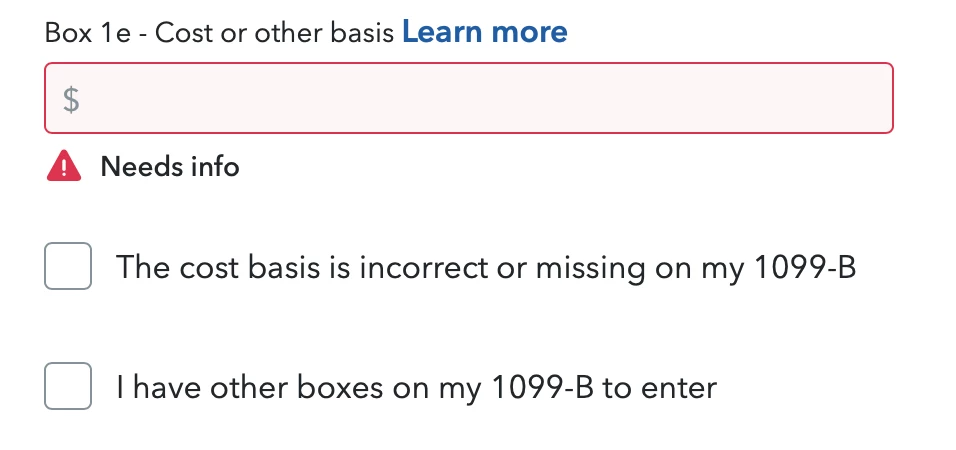
But to answer your question, you need to go to the brokerage website to find the actual cost basis. last year I called E-trade and they told me how to locate the info. This year I found it on my own. In 2024, we sold several stocks from different purchase dates at one time so I listed all the sales for that day using the sum of Box 1d - total proceeds. I suppose you could still do that if you sold throughout the year. The cost basis on your 1099-B Box 1e will be marked as 0. You will need to place a Check Mark for "I need to adjust my total cost basis." In my situation, we had 54 line items. I entered each individual cost basis on a spreadsheet and then entered only the TOTAL adjustment. Make sure you make it a negative. I also clicked item B noting the cost basis incorrect.
If you happened to sell ESPP, that needs to be a separate sale and usually the cost basis is covered so it will be on the 1099.
Good luck!!
Yes, you would be double counting income if you entered $0 for the cost basis on restricted stock units (RSU's). That is because the value of them that you did not pay for is taxed to you as wage income in the year they vest. So, that income plus what you paid for them, if anything, would be your cost basis when they are sold.
For the employee stock purchase plan (ESPP) stock, ordinary income will be reported to you as wage income in the amount of the discount you received when you acquired the shares. It will be reported in the year you sell the shares, so in your case you will have ordinary income in box 1 on your W-2 form for the ESPP shares sold in 2024, but not necessarily on the RSU's, as that income would be reported in the year they vested.
For your Form 1099-B entries in TurboTax, you should enter the RSU's and ESPP stock sales separately and the program will help you calculate the adjustment that needs to be made to the cost basis reported on your form 1099-B. This will entail entering information from the form 3922 in the case of ESPP stock and entering the ordinary income reported upon vesting of RSU shares.
For the ESPP shares sold, the ordinary income from the discount will be reported on your W-2 form, so you could take that amount and divide it by the number of shares sold to arrive at the discount per share. If you know what you paid for the shares, as listed on the Form 3922, the correct cost basis for the Form 1099-B entry would be that cost per share plus the discount per share times the number of shares sold. If you know what the correct cost basis is, you can just enter that rather than choose to have TurboTax help you with the calculations.
For the RSU shares, the correct cost basis will usually be what was included in your wages upon vesting, since you probably didn't pay anything to acquire them.