February 19, 2025
Solved

How to fill RSUs that were not sold but I got gains during last year

  • February 19, 2025
  • 1 reply
  • 0 views

Hi guys,

First post here, I'm not sure if it's the right place to ask this question. Basically I was employed last year (2024) and throughout last year I got some RSUs. I have not sell any of my RSUs and by the end of the year I gained some money out of it. I did not sell anything and I'm not sure how to fill this information in my turbotax application. 
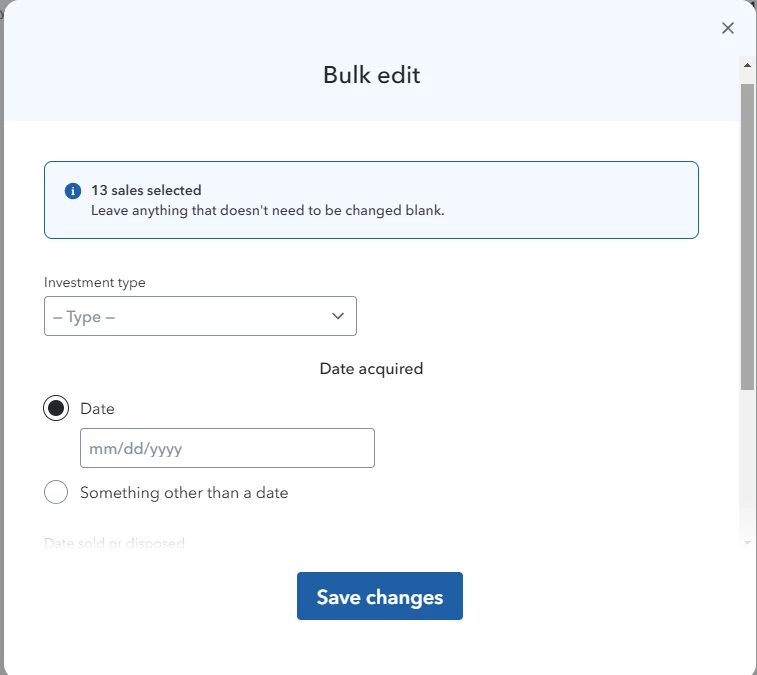
After I linked my eTrade account, turbotax sees that I got gains from my RSUs that I obtained last year but its not clear what should I enter in this screen.

Thanks in advance!

    Best answer by mglauner
    • You normally don't have any immediate tax liability when you receive an RSU, but you will typically have to report income and pay taxes when the RSU vests and you receive actual stock shares.
    • Since stock you receive through stock grants and RSUs is essentially compensation, you'll usually see it reported automatically on your W-2. Typically, income taxes are withheld to go against what you might owe.
    • If you sell the stock at a higher price than its fair value at the time of vesting, you'll have a capital gain.


    If you received a 1099-B for your Vesting, here's how to enter that: 


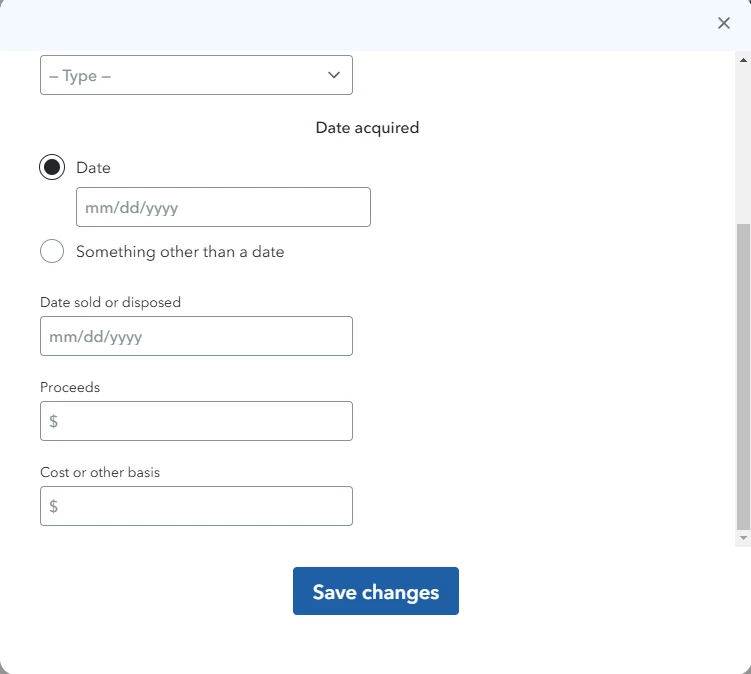
    • Choose RSU as Investment Type
    • Enter a date if all stock issued on same date, or 'something other than a date' (Various) if not
    • Proceeds as shown on your 1099-B
    • For Cost Basis, if you didn't pay for the stock, $0 is your Cost Basis.  
    • If you received the stock at a discount, use the Grant Price as the Cost Basis, plus any discount added to your W-2 as the Cost Basis.  You'll have to do some math, if that applies. 


    It's good that you're tracking this for your records.  You'll need the stock price at Grant Date, Exercise (vest) Date, and Sale Date when you report your actual sales from the 10099-B then.


    Here's more info on RSU's and Taxes you'll find helpful, as well as How to Enter 1244 Stock.



    1 reply

    mglaunerAnswer
    February 21, 2025
    • You normally don't have any immediate tax liability when you receive an RSU, but you will typically have to report income and pay taxes when the RSU vests and you receive actual stock shares.
    • Since stock you receive through stock grants and RSUs is essentially compensation, you'll usually see it reported automatically on your W-2. Typically, income taxes are withheld to go against what you might owe.
    • If you sell the stock at a higher price than its fair value at the time of vesting, you'll have a capital gain.


    If you received a 1099-B for your Vesting, here's how to enter that: 


    • Choose RSU as Investment Type
    • Enter a date if all stock issued on same date, or 'something other than a date' (Various) if not
    • Proceeds as shown on your 1099-B
    • For Cost Basis, if you didn't pay for the stock, $0 is your Cost Basis.  
    • If you received the stock at a discount, use the Grant Price as the Cost Basis, plus any discount added to your W-2 as the Cost Basis.  You'll have to do some math, if that applies. 


    It's good that you're tracking this for your records.  You'll need the stock price at Grant Date, Exercise (vest) Date, and Sale Date when you report your actual sales from the 10099-B then.


    Here's more info on RSU's and Taxes you'll find helpful, as well as How to Enter 1244 Stock.